

Operations•4 min read
Your AI Isn't Failing Because It’s Weak—It’s Homeless
You bought the tools, but you ignored the foundation, and now you are paying the price for building on sand.
Nov 29, 2026
Insights & Strategies
Expert insights on service business automation, lead capture, and growth strategies.
You bought the tools, but you ignored the foundation, and now you are paying the price for building on sand.

You have spent months testing AI tools, but your business is no more efficient than it was a year ago; here is why.

You think adding more headcount is scaling, but you are just building a more expensive version of your own chaos.

You are burning capital on AI experiments that look like progress but are actually building a house of cards.

You are building intelligence on top of a foundation that wasn't designed to support the weight of actual production.

You think you are experimenting with AI, but you are actually just piling up technical debt that will eventually bankrupt your agility.

If your AI strategy starts and ends with model performance, you are already losing the race to operational maturity.

Most businesses are trapped in a cycle of expensive experiments that never turn into profit; here is why your AI strategy is failing.

You built a prototype that worked in a lab, but it’s dying in the real world—here is the painful truth about why your operations are stalling.
If you are still treating your AI like a chatbot, you have already lost the competitive edge that defines 2026.
You are pouring money into AI tools while your underlying operational rot accelerates—here is how to actually fix it.

You are not failing because the technology lacks power; you are failing because your infrastructure is allergic to the truth.

You think your team is closing deals, but your manual intake system is killing your growth before the first conversation even starts.

You think you have an AI problem, but you actually have a structural one—and it’s costing you more than you realize.

Most businesses are treating AI like a new piece of software, but it is actually an entirely new operating system.

Most companies blame their AI tools for lack of results, but the real rot is sitting in your organizational structure.

Most businesses are building AI sandcastles while their infrastructure is built on shifting desert sand.

Most businesses are addicted to the 'pilot' phase, and it is killing their ability to actually scale innovation.

If your AI cannot make a decision without a human babysitting it, you haven't built a system—you have built a bottleneck.
You have been obsessed with picking the right AI brain, but your business is starving for the right skeleton.
You think you have a technology problem, but you actually have a systemic architecture collapse.

You have dozens of AI experiments running, yet your operations haven't changed. Here is why your innovation is just expensive theater.

You have bolted AI onto a broken process, and you are surprised that the results are just faster versions of your previous mistakes.

You have the tech, the data, and the talent, yet your ROI is flatlining—because you are building models, not systems.
If you are still waiting on centralized model providers to solve your operational bottlenecks, you are already behind.

You aren't failing because the AI doesn't work; you are failing because you are treating automation like a software update.

You aren't winning because you have AI; you're losing because your architecture is fundamentally misaligned with your growth.

You think you're innovating, but you're actually just funding a perpetual experiment that will never see the light of day.
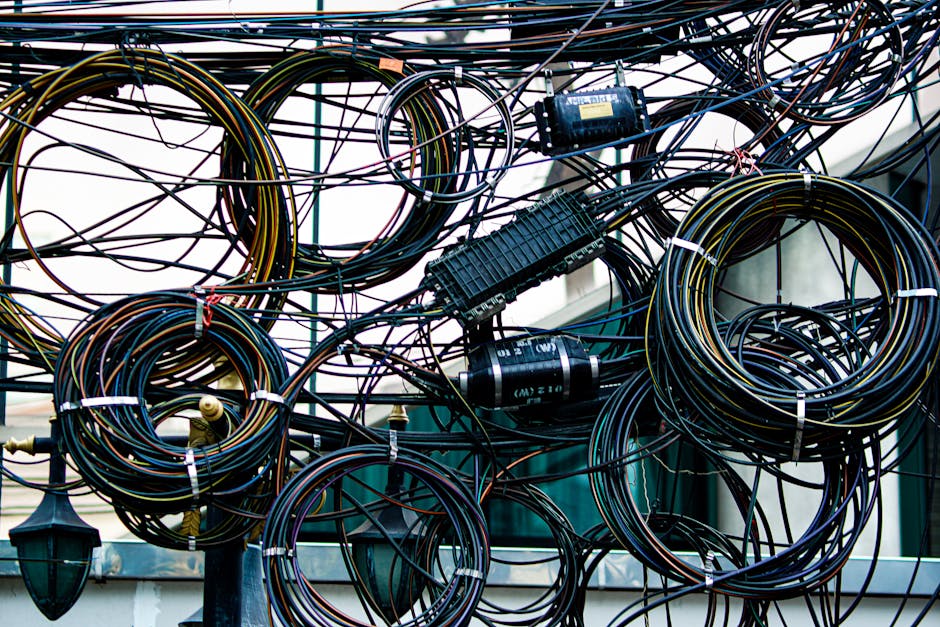
Most AI initiatives are destined for the scrap heap before they even launch—here is why your infrastructure is the culprit.

You have the models, you have the data, and yet your operations are stalling; here is why your infrastructure is the culprit.

You aren't struggling with bad technology; you are suffering from a silent design failure that is costing you scale.
You think you’re scaling innovation, but you’re actually just scaling expensive, uncoordinated digital debt.

Most businesses are using AI to optimize the wrong things, effectively automating their own eventual obsolescence.

You are pouring money into a faster engine, but you never built the chassis to actually hold the weight.
Most businesses are building AI on sand, ignoring the reality that your architecture defines your survival.

Most businesses are trying to build a space station on top of a foundation made of mud and disorganized spreadsheets.

You have the models, you have the data, and yet your operations feel more chaotic than ever—because you are missing the foundation.

Most businesses aren't failing at AI because of the tech; they are failing because their internal plumbing is broken.

Your AI isn't failing because it lacks intelligence; it is failing because your business lacks the plumbing to support it.
You think you are scaling, but you are actually just piling debt onto a foundation that was never built for autonomous agents.

You built the AI system because you wanted to scale, but now you are just managing a more expensive, digital mess.
You think you have a technology problem, but you actually have an architectural rot that AI is merely exposing.

You think your team is closing deals, but your manual intake process is actually killing them before they even start.
You think you are innovating with AI, but you are actually just building an expensive collection of digital paperweights.

You have spent millions on AI, yet your operations feel more chaotic than ever—here is why your foundation is the real culprit.

You think you are innovating, but you are just building expensive shelfware that will never move the needle.
You built a business on efficiency, but your reliance on public cloud AI is quietly eroding your margins and sovereignty.

You think you are building an AI-powered company, but you are just collecting expensive, orphaned experiments.

You aren't losing to better AI; you are losing to a fragile infrastructure that wasn't built to scale.

Most companies are playing with toys while their competitors are building autonomous factories that never sleep.

Most businesses are trying to wire a skyscraper using extension cords, and that is why your AI initiatives are stalling.
Most businesses are building AI castles on top of sand, ignoring the structural rot that will inevitably cause their collapse.
Adding AI tools to your broken processes is just automating your own obsolescence.
Most businesses are building sophisticated prototypes that will never actually run their operations.

It is failing because your architecture is a house of cards waiting for the wind to blow.
If your AI strategy is still just a collection of experiments, you aren't innovating—you're just bleeding cash.
Most companies are building on quicksand; if your AI infrastructure isn't designed for control, you are subsidizing failure.

You aren't struggling because the technology is flawed; you are struggling because your operational foundation is rotting.
Stop building experiments and start building infrastructure; the graveyard of AI pilots is already full of good intentions.
You think you have an AI strategy, but you actually just have a collection of expensive, disconnected experiments.

You aren't losing to better technology; you are losing because your expensive AI experiments are built to impress, not to operate.
You aren't struggling because you lack the right AI tool; you are failing because you are treating automation like an accessory.

You aren't failing because you lack ambition; you are failing because you are managing your company like a human, not a system.

You think you are building an AI-first company, but you are actually just funding a series of expensive, disconnected experiments.

You have the models, but you lack the plumbing. Here is why your AI strategy is hitting a wall.

You aren't struggling with technology; you are struggling with a fundamental misunderstanding of what operational readiness actually looks like.
You are building a skyscraper on a foundation of sand; stop adding features and start fixing your operational architecture.

Most companies are stuck in a pilot-to-production graveyard because they view AI as software, not as an operational redesign.
You are pouring capital into experiments that will never touch your bottom line until you fix your infrastructure.

Most businesses are drowning in data, while their AI infrastructure burns cash on models that never actually work.

You bought the tools, but you forgot to rebuild the house. Here is why your AI pilots are dying on the vine.

If your AI initiatives are stuck in the sandbox, you are not suffering from a tech problem—you are suffering from an architecture failure.

You think you have a lead generation problem, but you actually have a terminal velocity problem that is killing your growth.
You are running expensive experiments while your core operations rot from neglect; here is why your AI is not scaling.

You think you’re building an AI advantage, but you’re actually building a digital prison that will eventually bankrupt your agility.

You are spending thousands on experiments while your actual operations are slowly choking to death on data debt.

You bought the smartest engine in the world and put it in a tricycle; here is why your business infrastructure is the real bottleneck.
You aren't failing because the technology is flawed; you are failing because you are treating AI like a feature instead of a structural redesign.

Adding AI to an inefficient business doesn't make it faster; it just accelerates your existing mistakes.
You think your AI is working, but your infrastructure is silently bleeding capital and control.

You are running dozens of disconnected AI experiments, and every single one of them is hitting the same invisible wall.

You have built a digital paperweight, and the problem isn't your technology—it is your complete failure to change how work actually gets done.

You have bolted AI onto a broken process, and you are surprised that it is still leaking profit.

You think you are innovating, but you are actually just building a graveyard of disconnected scripts that will never scale.

Stop building custom AI stacks and start managing the infrastructure of your business operations before you go broke.
Most businesses are addicted to the thrill of a prototype while their core infrastructure slowly rots from neglect.
You think you are building a competitive advantage, but you are actually building an expensive, fragile technical debt trap.
You think you are innovating, but you are actually just funding a very expensive science project that ignores the real math of your operations.
You are not suffering from a lack of technology; you are suffering from a lack of operational architecture.
Most businesses aren't building an AI strategy; they are building a collection of expensive, fragile experiments.

You are treating AI like a new piece of software instead of a fundamental change to how your business survives.
Most businesses aren't failing at AI technology; they are failing at the operational architecture that makes AI profitable.

You are losing 30% of your growth to friction you cannot see, and no amount of hiring will fix the underlying architecture of your firm.

You are caught in pilot purgatory, burning cash on experiments that never leave the lab because you built tech, not systems.
You are spending a fortune on AI compute, yet your operations remain stagnant; it is time to stop scaling and start re-engineering.
Most AI initiatives aren't failing because of the technology; they are failing because your business infrastructure is a house of cards.
You think your AI problem is a lack of smarts; it is actually a crumbling foundation that won't hold the weight.

If your AI deployment feels like a fragile add-on rather than the heartbeat of your business, you have already lost.
You are caught in pilot purgatory, and your infrastructure is the reason why your AI initiatives will never scale.

You aren't losing to better AI; you are losing because your infrastructure is built for yesterday's manual world.
Whether you're launching a new initiative, modernizing operations, or expanding an existing platform — we build the technology that supports your growth.